Unlocking Narrative Illustration: A Reflection from Art of Morby’s Beginner’s Guide to Storytelling in Art
3 Dec 2025
Feature

Recent Posts
We Are Moving
14 Feb 2026
Toontopia Festival Returns for Second Edition as Nigeria’s Animation Ecosystem Expands
14 May 2026
Cultural Blind Spot and the Missing Category: Why AMVCA Must Recognise African Animation
13 May 2026
Cairo’s Animatex 2026: A 90-Year Legacy Meets the Cutting Edge of Global Animation
18 Feb 2026
Introducing The10: A Curated List of Women Shaping Africa’s Comic and Animation Future
16 Feb 2026
In an increasingly visual digital landscape, illustration is evolving beyond its decorative roots. Today, the most compelling artworks are not just aesthetically pleasing; they are vessels for profound, personal narratives, one capable of carrying memory, meaning, and emotional resonance. At the heart of this shift lies narrative illustration, a practice that blends technical execution with storytelling intent to create images that function as both art and narrative.
For aspiring artists, transitioning from mere technique to compelling storytelling can feel like a daunting leap. However, as insights from leading art professional, Toyin Ajetunmobi (Art of Morby), at Emergence: 6-months training program by O’da Gallery suggest, the secret lies in a dedicated focus on authenticity, technical intent, and cultivating a resilient artistic voice. His sessions provided clear, practical guidance on authenticity, visual composition, and the development of an artist’s personal voice, elements that are becoming increasingly important in today’s competitive creative economy.

Authenticity as Creative Infrastructure
A key principle emphasised in Morby’s teaching is that narrative illustration begins with identity. Every illustrator brings a unique biography to their work, and this personal history is the most potent resource for developing a distinctive style. Narrative illustration demands a commitment to self-discovery, reinforcing that artistic identity is the crucial starting point.
Rather than treating art as a detached technical exercise, Morby encourages artists to ground their work in lived realities. Artists are encouraged to delve into their past, be it a childhood memory, a cultural experience, or early romantic turmoil, as these experiences form the bedrock of their creative expression. For example, an artist focusing on mental health themes might choose colours and mediums that resonate with their experiences. Similarly, an artist might be inspired by a piece symbolising the transition from darkness to dawn, using surreal elements like cloudy hair.
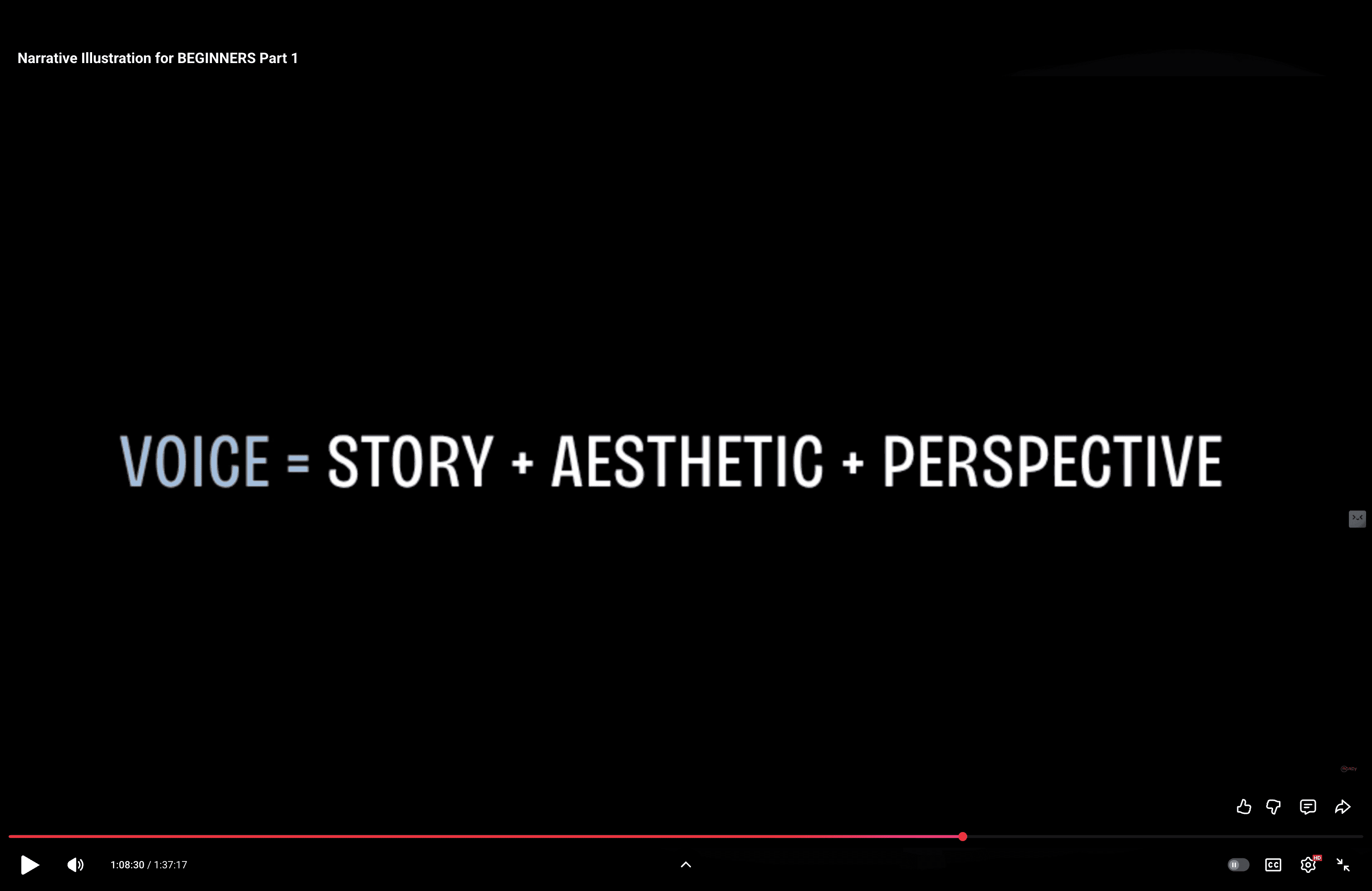
This approach does more than strengthen storytelling; it protects the artist’s work from imitation. These deep, personal narratives cannot be easily replicated as their authenticity becomes a professional asset, supporting the development of a recognisable style.
Technical Intent and Mastery of Visual Language
Once the personal narrative is established, the focus shifts to the technical discipline of translating it visually. Beyond identity, narrative illustration requires a deliberate approach to technique. Every artistic decision function as part of the narrative architecture of an artwork.
Morby underscores the importance of defining the intent of a piece before execution. Understanding the intent behind each piece is vital so that the visual structure can be designed to support it. As one illustrates, the core message should shine through from the outset, connecting viewers to the story.
In narrative illustration, composition is paramount. It is the orchestration of visual elements designed to guide the viewer’s eye through the story you wish to tell. The successful narrative artist understands that visual elements carry psychological weight; curves can suggest softness, while jagged edges might invoke danger.
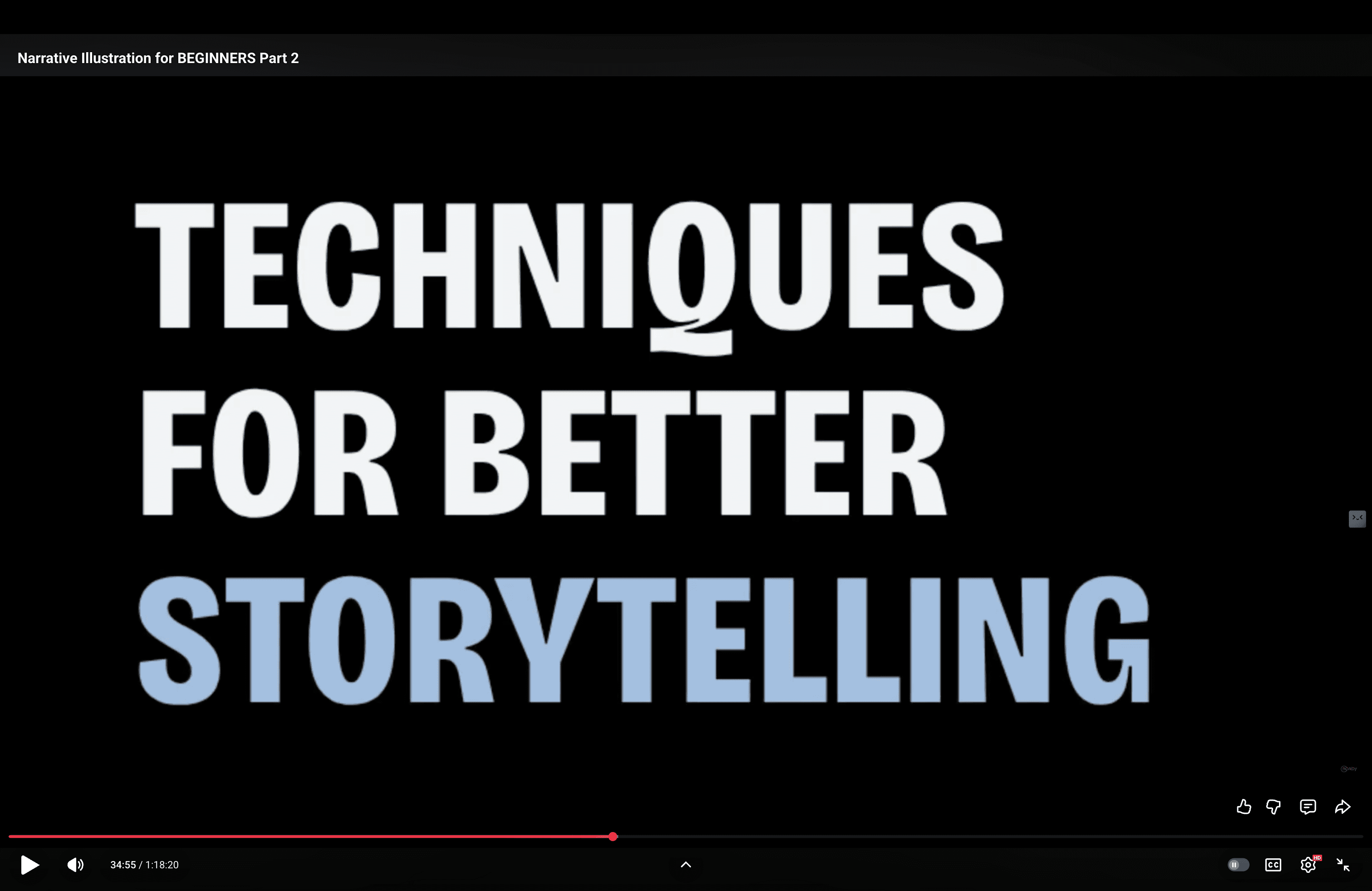
Furthermore, techniques such as juxtaposition and proportion are vital for impact. A sophisticated approach, such as allocating space using the 'big medium small' principle (e.g., 70% for the main element, 25% for secondary detail, and 5% for minor touches), enhances visual interest and manages the viewer's focus effectively. Understanding scale is also crucial, using familiar objects, such as a tree, to establish context for a character’s size and enhance realism.
Crucially, colour acts as a storyteller in its own right. Using saturated colours can elicit strong feelings, crafting a vibrant narrative tapestry. Similarly, contrasting the calmness of a serene background with the chaotic emotions of a character can illustrate internal struggles effectively. The ultimate goal is to move beyond generic portraits and infuse the work with life and intention.
Exploring Mediums and Cultivating Connection
The culmination of authentic vision and technical mastery is the ability to connect deeply with an audience. This connection is fostered by deliberately infusing emotion through clear expressions and relatable body language. The freedom to dive into various mediums further expands this ability.

In his session, Morby highlighted the importance of experimenting across mediums as artists refine their narrative abilities. Each medium brings its own flair to narrative illustration. For instance, the tactile nature of embroidery might convey warmth and nostalgia, while sharp digital illustrations could evoke modernity and edge. Artists exploring different mediums can effectively express themes like mental health or nostalgia. Digital sketching, in particular, offers the freedom to prototype and adjust elements, encouraging creativity without fear of permanence.
For the independent artist, cultivating a loyal audience is a cornerstone of professional success. Art of Morby advise focusing on attracting a core group that appreciates a unique vision, rather than just chasing viral visibility. By reflecting on why certain artists resonate with you, you can better understand how to forge this deep connection with your audience through your own narratives.
Embracing Evolution and Resilience
For early-stage illustrators, the pathway to mastery is neither linear nor pressure-free. The journey of an illustrator is one of constant growth and overcoming challenges. Many artists grapple with the fear of not meeting audience expectations or the pressure to conform to trends and mimic popular styles. Acknowledging these feelings is crucial; they are part of the artistic journey.
Paradoxically, embracing creative constraints can lead to more innovative solutions. By choosing to specialise in a niche or theme, such as surreal landscapes, an artist can achieve deeper growth than by dabbling in numerous techniques. This consistency helps create an identifiable brand that audiences will recognise and appreciate.

Ultimately, narrative illustration is a perpetual process of self-exploration and skill acquisition. By aligning personal themes and techniques with emotional narratives, we can create illustrations that genuinely resonate with audiences. As artists grow in their abilities, honing their unique voice opens doors to innovative storytelling opportunities.
The message is clear as Art of Morby’s guidance demonstrates, the most compelling illustrations are those that reveal not just what an artist can draw, but what an artist has lived, understood, and chosen to express.
Sources:
Narrative Illustration for beginners - https://www.linkedin.com/posts/toyinajetunmobi_narrativeillustration-artofmorby-conceptart-ugcPost-7397555573019381760-70nf/
Lecture Slides - https://www.dropbox.com/scl/fi/67bz1oll9jf8b1b1jjhl7/Morby-s-Lecture.pdf?rlkey=vilb2aeg6sonfpr10rw0f1pki&e=2&st=1vfvy85g&dl=0
…………………………………………………………….
…………………………………………………………….
AI Use at TheACE
TheACE uses artificial intelligence tools to support research, drafting and analysis across Africa’s creative industries. All content is verified, edited and approved by our human editorial team to ensure accuracy, clarity and responsible storytelling. AI assists our work; it does not replace human judgment.