Editorial: The Nigerian Comic Industry Finally Has a Reference Point — The Bookause 2025 Report
30 Jan 2026
Exclusive
Recent Posts
We Are Moving
14 Feb 2026
Toontopia Festival Returns for Second Edition as Nigeria’s Animation Ecosystem Expands
14 May 2026
Cultural Blind Spot and the Missing Category: Why AMVCA Must Recognise African Animation
13 May 2026
Cairo’s Animatex 2026: A 90-Year Legacy Meets the Cutting Edge of Global Animation
18 Feb 2026
Introducing The10: A Curated List of Women Shaping Africa’s Comic and Animation Future
16 Feb 2026
The Bookause Report did not begin in a boardroom, a policy roundtable, or an academic institution. It began in a Google search bar.
While searching for credible, up-to-date information on the African comic book and animation space, what surfaced instead was a familiar problem: fragmented data, outdated web pages, and surface-level commentary that failed to reflect the scale, complexity, and evolution of the industry itself. What should have been accessible knowledge was scattered and unreliable. What should have been documented was largely invisible. That discovery by TheACE founder, Mujeeb Jummah, revealed something deeper than frustration. It exposed a structural failure.
Nigeria’s comic book industry is vibrant, productive, and culturally influential, yet it remains poorly documented and consistently misunderstood. It exists in practice but not in record. In output but not in policy. In talent but not in systems. This is the gap the Bookause 2025 Annual Nigerian Comic Industry Report, AKA The Bookause Report, was created to address.
The urgency of that gap became even clearer to our founder in 2024, in the events after Comic Con Ibadan. Despite being a significant gathering for creators, publishers, studios, and enthusiasts, some media coverage reduced the event to a children’s novelty. The misrepresentation was not malicious, it was symptomatic. It revealed how little contextual understanding exists around comics, even among those tasked with covering culture.
When an industry lacks language, data, and reference points, it becomes easy to flatten it.
The first edition of this report was a response to that flattening. It functioned as a proof of concept, an attempt to map the outlines of an ecosystem that had never been properly mapped before. Its message was simple but necessary: this industry exists, it is active, and it matters.
The Bookause Report goes much further. This second edition expands the scope significantly, examining the historical development of the Nigerian comic space, its market dynamics, structural gaps, and the lived realities of creators, publishers, studios, and audiences. It moves beyond anecdotes and moment-to-moment observation to present a coherent, defensible picture of an industry operating without the infrastructure it requires to mature.
What the report makes unmistakably clear is that Nigerian comics do not suffer from a talent deficit. They suffer from a systems deficit. Creators operate as compressed production studios, carrying the weight of writing, illustration, lettering, publishing, marketing, distribution, and audience engagement, often self-funded and unsupported. Publishing pipelines are unstable. Distribution remains informal. Retail access is inconsistent. Digital platforms provide visibility but not security. Burnout is common, not incidental. These are not individual failures. They are structural outcomes.
The report also challenges one of the industry’s most persistent myths: that there is no audience. Readers exist. Engagement exists. Demand exists. What is missing is a coherent value chain that allows discovery, access, and revenue to function in alignment. Comics circulate widely, but value rarely circulates back to creators in proportion to that engagement.
Crucially, the report refuses to treat comics as a niche subculture. It positions them as foundational intellectual property infrastructure; upstream of animation, gaming, film, advertising, and digital media. Many of the stories, characters, and visual languages driving larger creative sectors originate in comics. Ignoring this upstream role weakens the entire creative economy.
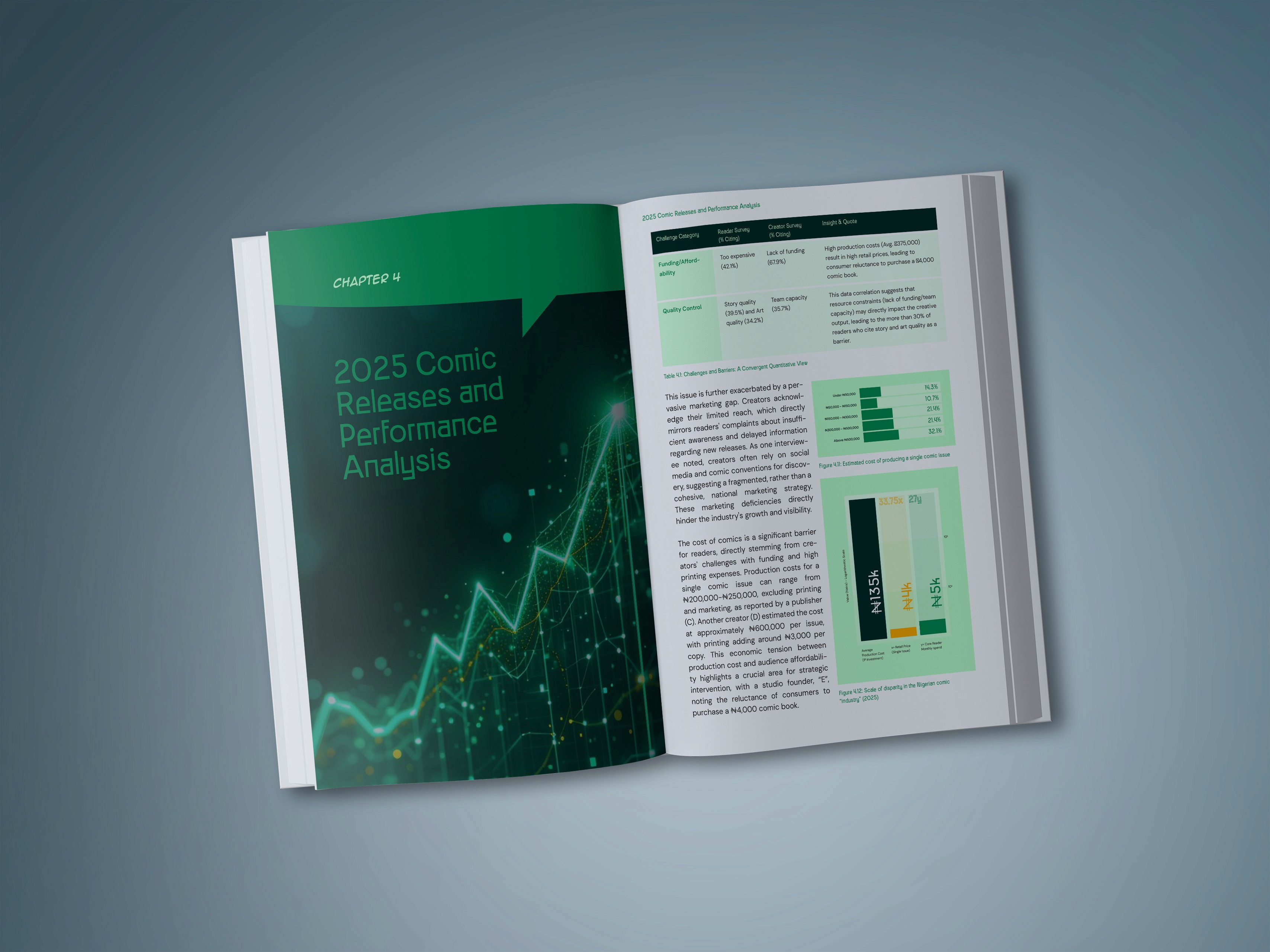
One of the report’s most consequential contributions is its emphasis on data as infrastructure. By documenting production costs, publishing realities, transmedia licensing milestones, and ecosystem dynamics, the report provides what the Nigerian comic space has long lacked: a data framework that enables credibility, de-risks investment, and informs policy. Passion can ignite an industry, but only data can protect it.
Beyond analysis, the report outlines practical directions, carefully framed, grounded in evidence, and designed to be actionable across stakeholder groups. These touch on publishing systems, distribution models, creator support structures, institutional engagement, and long-term sustainability. They are not presented as final answers, but as starting points for coordinated action.
Importantly, responsibility is not placed on creators alone. The report implicitly challenges policymakers, investors, cultural institutions, platforms, and academics to recognise their role in shaping the future of the industry. No ecosystem can grow if its most vulnerable participants are expected to carry the burden of structure on their own.
This is why The Bookause Report is not a celebration piece and not a complaint document. It is a foundation. It is meant to be used, cited, debated, refined, and expanded. We believe that industries matter less when they are invisible. They matter more when they are understood. That understanding begins here.
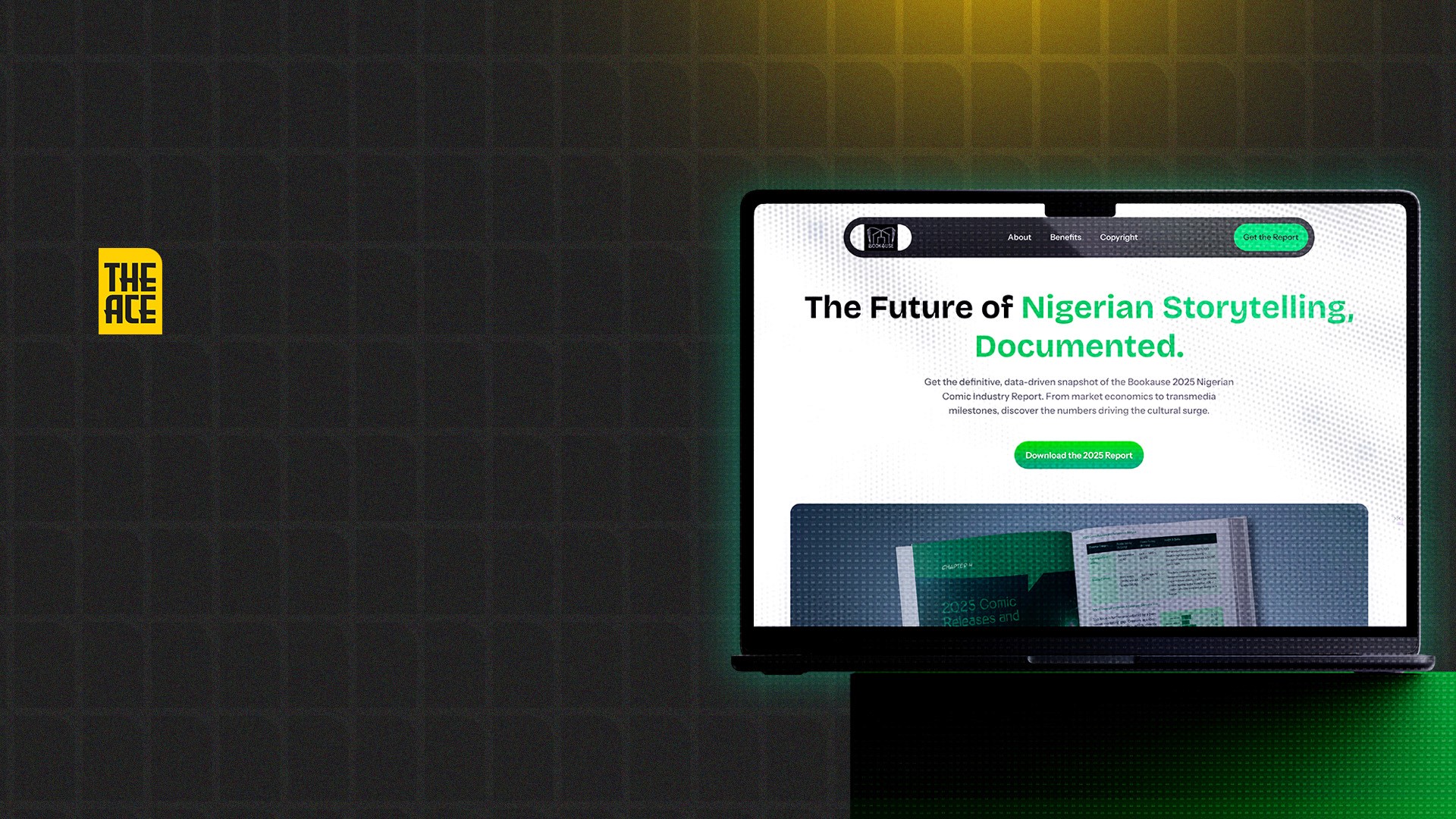
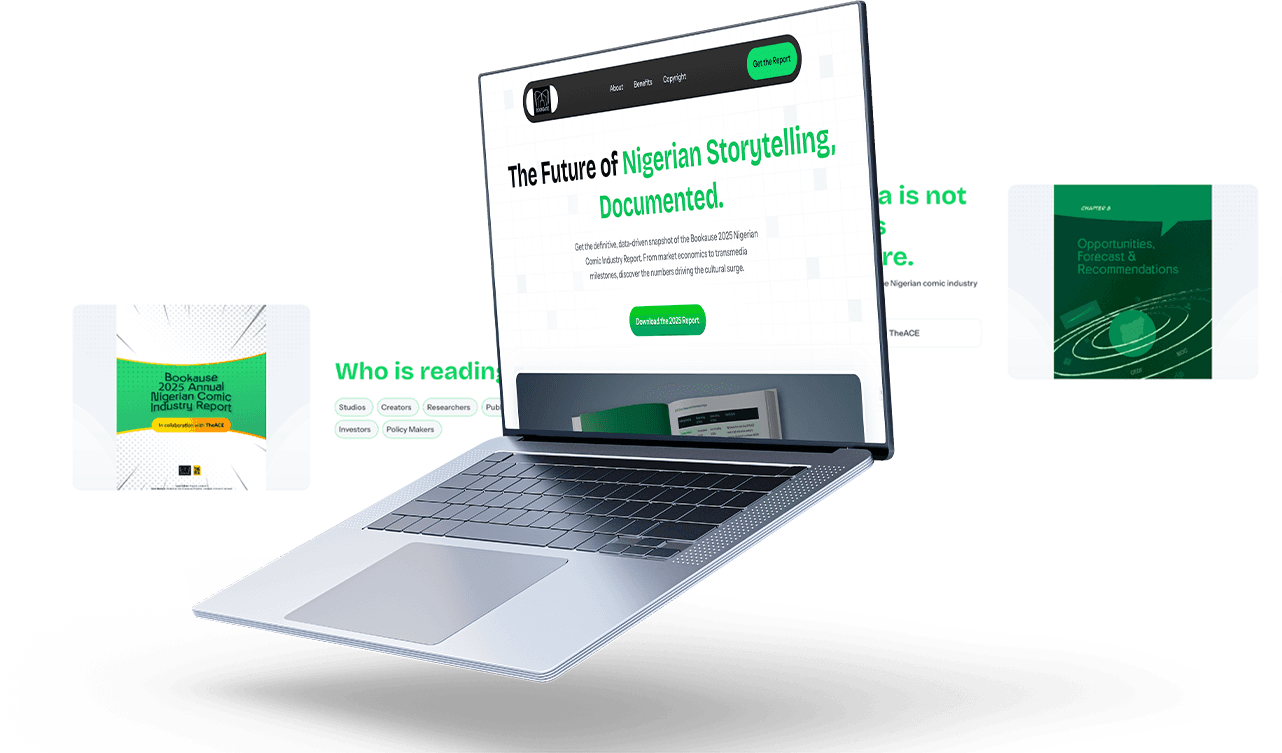
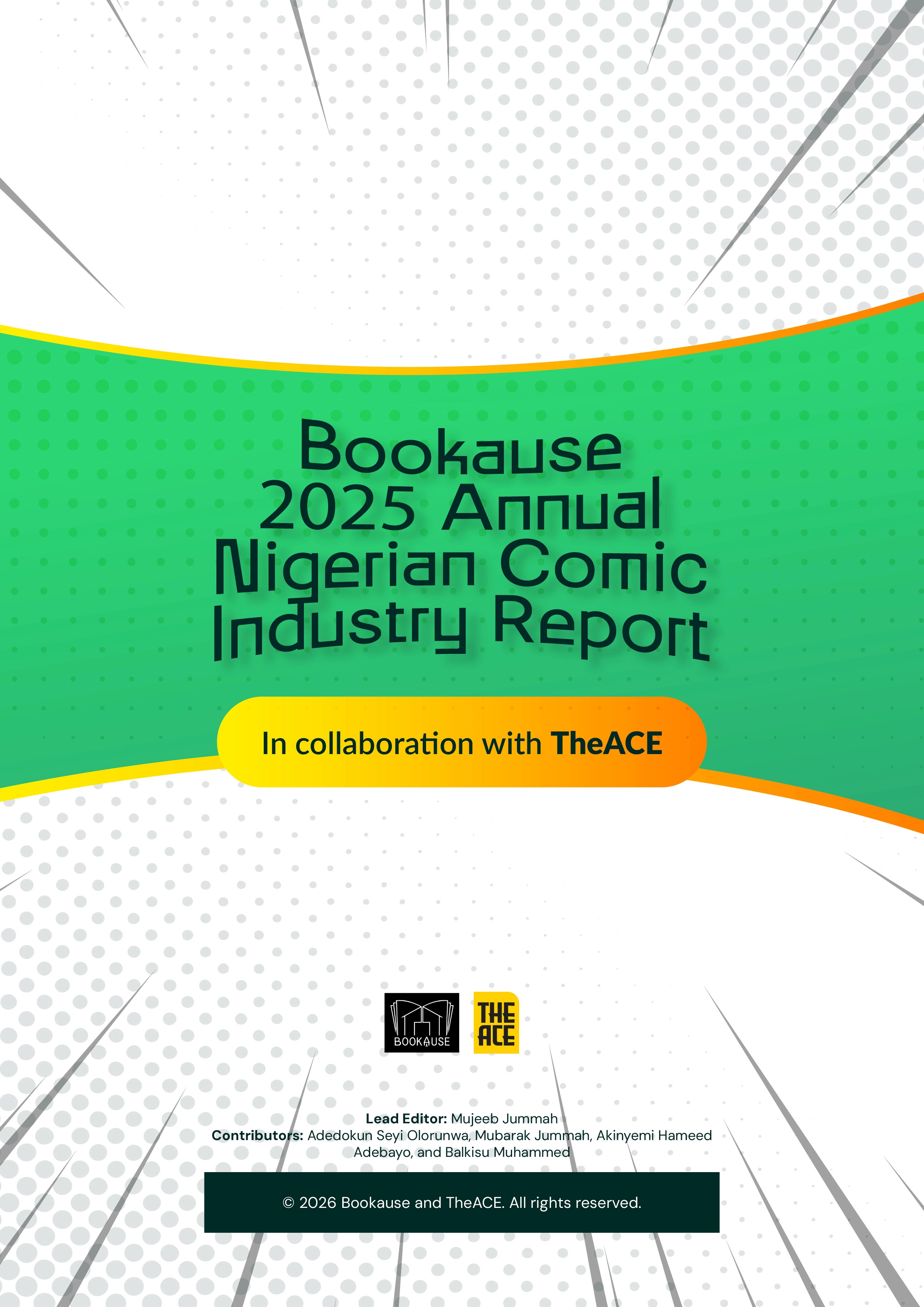
The Bookause 2025 Annual Nigerian Comic Industry Report is now available for public access.
--------------------------------------------------------
--------------------------------------------------------
AI Use at TheACE
TheACE uses artificial intelligence tools to support research, drafting and analysis across Africa’s creative industries. All content is verified, edited and approved by our human editorial team to ensure accuracy, clarity and responsible storytelling. AI assists our work; it does not replace human judgment.