Nigeria’s Comic Industry Runs on Talent and Momentum, Not Systems and Structure, and That Is the Problem
28 Jan 2026
Exclusive
Recent Posts
We Are Moving
14 Feb 2026
Toontopia Festival Returns for Second Edition as Nigeria’s Animation Ecosystem Expands
14 May 2026
Cultural Blind Spot and the Missing Category: Why AMVCA Must Recognise African Animation
13 May 2026
Cairo’s Animatex 2026: A 90-Year Legacy Meets the Cutting Edge of Global Animation
18 Feb 2026
Introducing The10: A Curated List of Women Shaping Africa’s Comic and Animation Future
16 Feb 2026
Nigeria does not have a comic book talent problem. It has a structure problem.
For decades, the country’s comic ecosystem has been praised for its creativity while quietly being abandoned by the systems that allow creative industries to survive. Artists are celebrated. Characters go viral. African stories trend. Yet behind the aesthetics is an industry held together by improvisation, personal sacrifice, and unpaid labour.
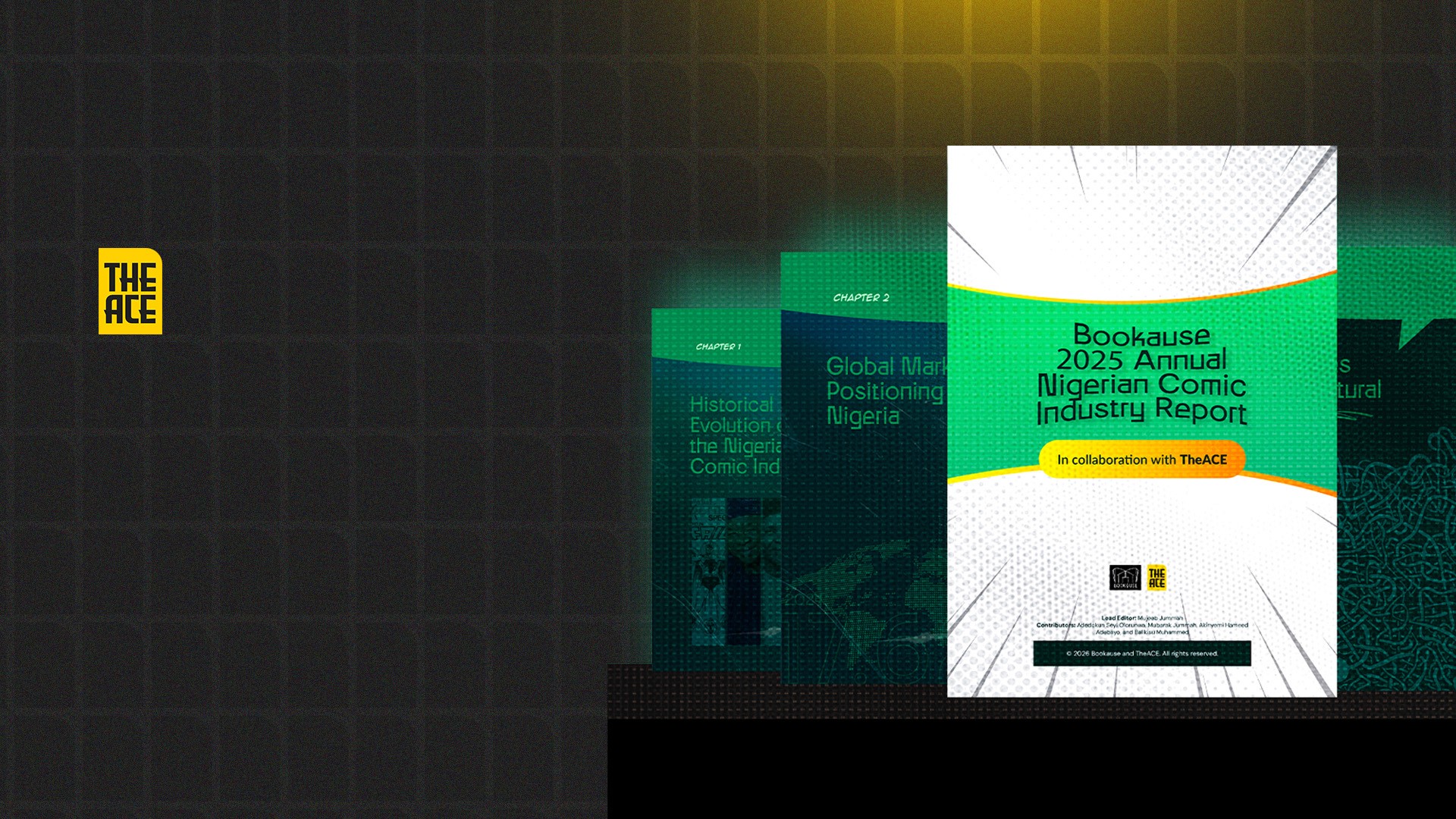
This contradiction sits at the heart of the Bookause 2025 Annual Nigerian Comic Industry Report (also Bookause Annual Comic Industry Report 2025). The report does not ask whether Nigerian comics are good enough. That argument is tired. Instead, it asks a more uncomfortable question: what kind of industry expects world-class output without providing world-class support systems?
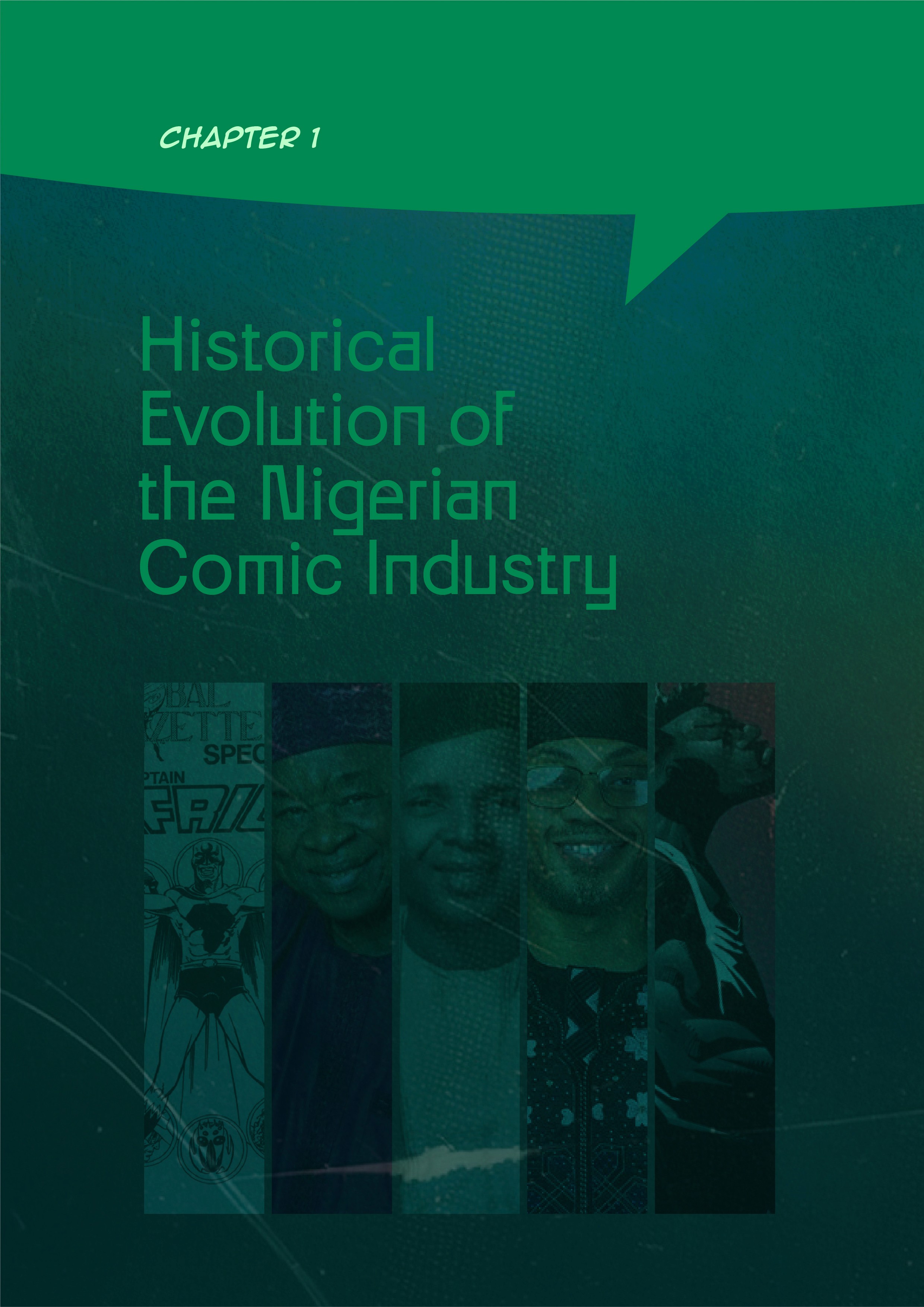
What emerges from the research is an ecosystem running almost entirely on invisible labour, where creators are expected to be everything at once. Writer. Illustrator. Letterer. Brand strategist. Social media manager. Distributor. Accountant. Fundraiser. Community builder. In most cases, the same person is doing all of this while personally financing production. Passion has replaced payroll. Visibility has replaced viability and economic security.
This condition is often mislabelled as resilience. In reality, it is structural weakness, and fragility disguised as hustle.
The report maps how this over-reliance on individual capacity limits scale and longevity. Talent is abundant, but it is overstretched. Projects launch, stall, relaunch, and disappear not because of creative failure, but because sustaining production without infrastructure is unsustainable by design. Burnout is not an anomaly in the Nigerian comic space; it is a predictable outcome.
One of the clearest findings of the report is how poorly comics are integrated into Nigeria’s formal publishing and retail structures. Despite their cultural relevance, comics remain marginalised in bookstores, under-supported by distributors, and excluded from policy-level creative economy conversations. Print production is expensive and unpredictable. Distribution networks are inconsistent and largely informal. Digital platforms offer reach and visibility but little financial predictability, leaving creators trapped between access and sustainable income. The result is an industry where success is measured by survival, not growth.
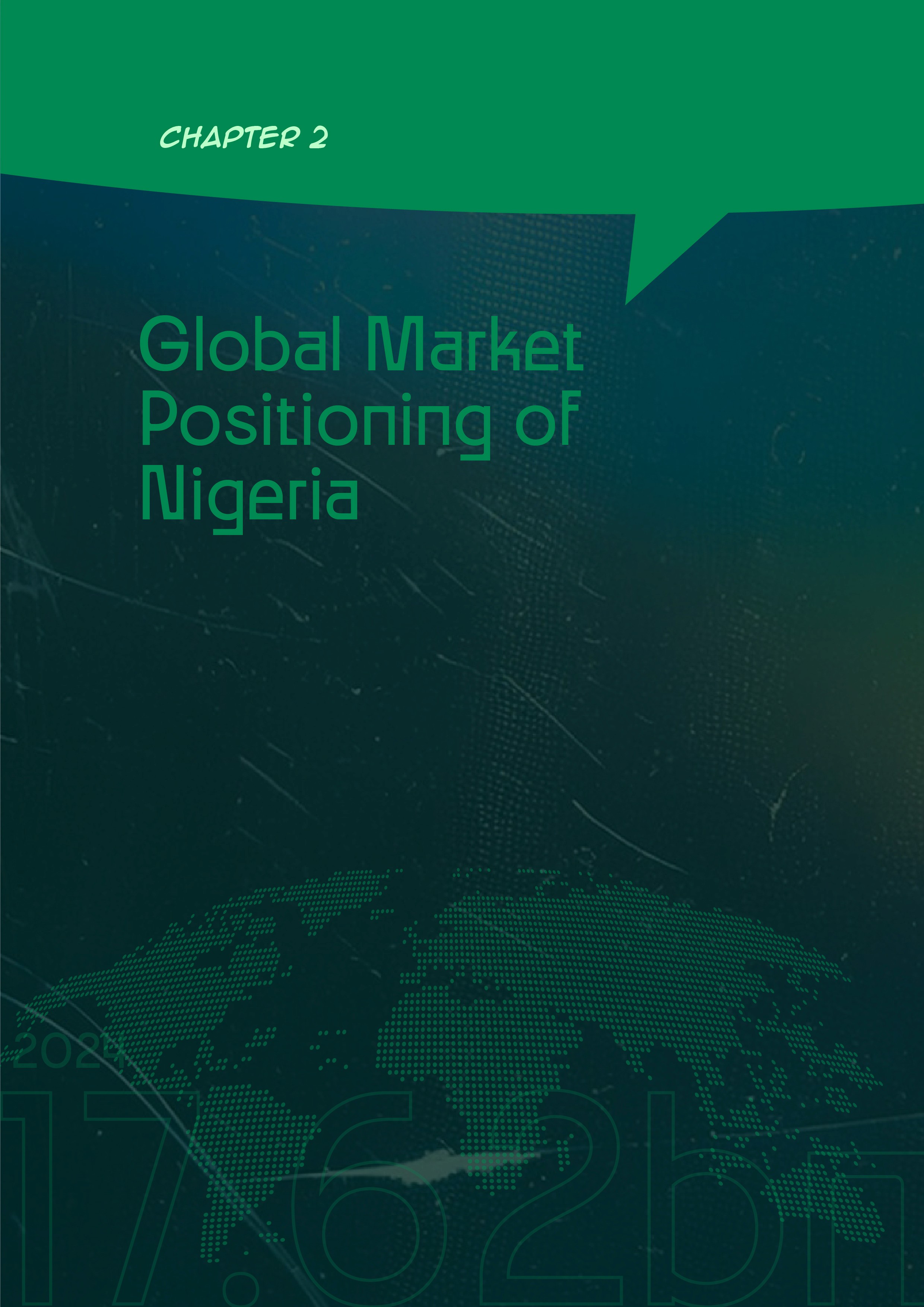
Yet the report is careful not to frame these issues as a lack of ambition or professionalism. Instead, it identifies a mismatch between growth and support. The industry has evolved faster than the systems around it, leaving creators and publishers to self-engineer solutions in isolation.
Equally important is the audience narrative the report dismantles; the lazy assumption that “there is no audience”. Readers exist. Engagement exists. Communities exist. Demand exists. What does not exist is a coherent value chain that connects readers to creators in ways that are fair, discoverable, and sustainable. Pricing barriers, platform dependency, limited retail access, and poor discoverability shape consumption patterns, often preventing value from flowing back to the source. Comics circulate widely, but revenue does not.
Perhaps most critically, the Bookause report exposes how the Nigerian comic industry is trapped in perpetual informality. Without data, everything becomes speculative. Without documentation, advocacy collapses. Without evidence, investors hesitate, institutions ignore, policy conversations move on to sectors that can prove their worth on paper, and institutions default to sectors that can quantify their impact. Passion cannot replace proof indefinitely.
This is why the report matters. It treats comics not as a subculture, but as an industry. One with labour dynamics. One with economic leakage. One with intellectual property value. One with direct relevance to animation, gaming, film, advertising, and digital media. Comics, the report argues, are not peripheral, they are foundational IP engines that Nigeria has consistently underutilised.
Furthermore, the report positions itself not a celebration of “how far we’ve come,” nor is it a pessimistic account of struggle. It is a framing document. It provides language for realities creators have long articulated informally. It offers context for publishers navigating unstable terrain. It gives media, investors, and cultural institutions a grounded entry point into an industry that has been consistently underestimated.
More importantly, it reframes the conversation. Nigerian comics are not failing. They are under-supported. And talent alone will not fix that. International attention will not fix that. Social media virality will not fix that. Without deliberate investment in publishing infrastructure, distribution systems, data collection, and creator protection, the industry will continue to export cultural value while importing economic precarity.
It is within this context that the Bookause Annual Comic Industry Report 2025 signals its most important contribution. Beyond diagnosis, the report outlines practical pathways, touching on publishing systems, distribution models, data frameworks, creator support structures, and institutional engagement, designed to move the industry from survival to sustainability. These recommendations are not abstract. They are grounded in the realities documented throughout the research, and they are framed to be actionable across multiple stakeholder groups.
Crucially, the report does not position responsibility solely on creators. It implicitly challenges policymakers, cultural institutions, investors, media platforms, and private-sector stakeholders to reassess their role in shaping the future of the industry. An ecosystem cannot mature if the burden of growth rests entirely on its most vulnerable participants.
The Bookause Annual Comic Industry Report 2025, therefore, does not pretend to offer fantasy solutions to these problems. It offers clarity. It names the gaps. It contextualises the struggle. It gives creators, publishers, media, investors, and institutions something they have never truly had before: a shared reference point where informed conversations can begin.
The full report will be available for public access on the 30th. And when it is released, it will not simply inform conversations about Nigerian comics, it will force them to mature.
--------------------------------------------------------
--------------------------------------------------------
AI Use at TheACE
TheACE uses artificial intelligence tools to support research, drafting and analysis across Africa’s creative industries. All content is verified, edited and approved by our human editorial team to ensure accuracy, clarity and responsible storytelling. AI assists our work; it does not replace human judgment.